
Opkomst van de Franse Jazz
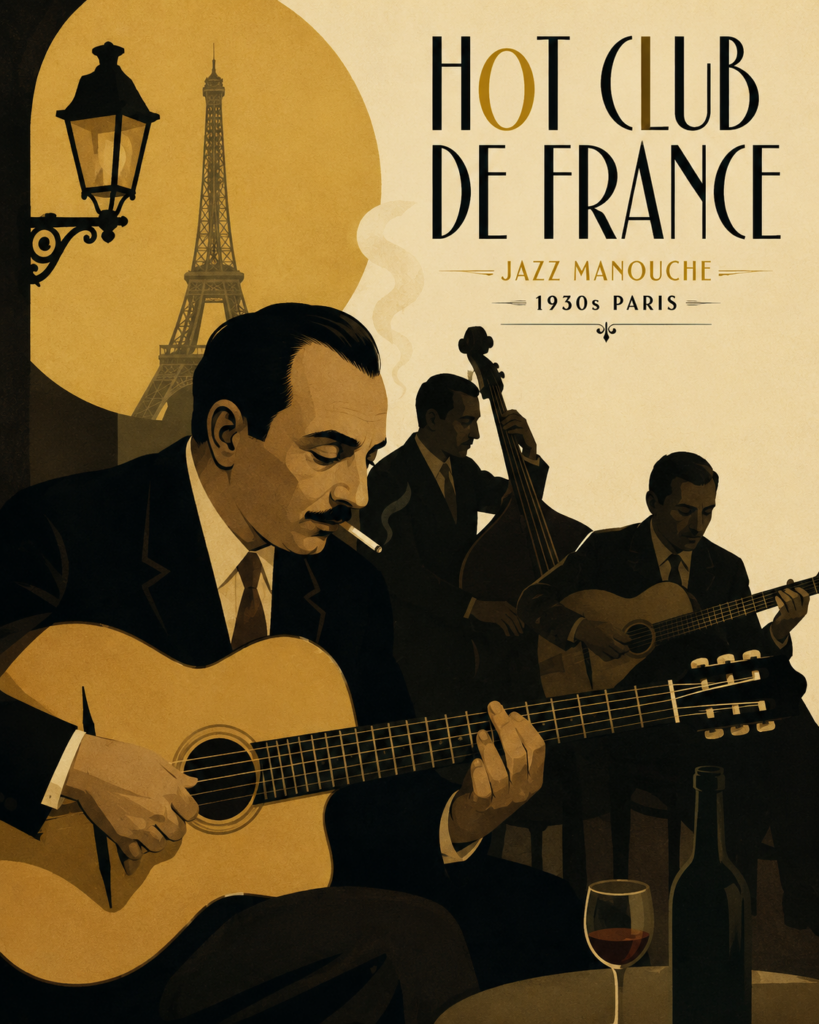
De opkomst van de Franse jazz in de vroege 20e eeuw is een fascinerend verhaal van culturele uitwisseling, artistieke vernieuwing en nationale identiteit. Na de Eerste Wereldoorlog stroomden Amerikaanse invloeden Europa binnen, en vooral in Parijs vond jazz een vruchtbare voedingsbodem. Amerikaanse soldaten brachten niet alleen hun muziek mee, maar ook de energie en improvisatie die jazz zo uniek maakten.
Hot Club De France
In de jaren 1920 en 1930 groeide Parijs uit tot een centrum van jazz in Europa. Clubs, cabarets en danszalen vulden zich met de klanken van swing en improvisatie. Franse muzikanten begonnen deze nieuwe stijl te omarmen, maar gaven er al snel hun eigen draai aan. Dit leidde tot een onderscheidende Franse jazztraditie, waarin elegantie en melodie vaak centraal stonden.
Een van de belangrijkste katalysatoren in deze ontwikkeling was de Hot Club de France, opgericht in 1932. Deze organisatie speelde een cruciale rol in het promoten van jazz als serieuze kunstvorm in Frankrijk. Ze organiseerde concerten, publiceerde tijdschriften en bracht muziekliefhebbers samen. Het was ook via deze club dat een van de meest iconische jazzformaties ontstond: het Quintette du Hot Club de France.